
In this interview, writer and reporter Uwa Ede-Osifo engages filmmaker Kiana Rawij in an insightful discussion around her most recent films, both set in Kenya: MAMA OF MANYATTA, a short documentary about HIV and gender-based violence in a Kisumu slum, and INSIDE JOB, a short fiction film about the South Asian diaspora in East Africa. Rawji discusses her family’s migration history, the motivation behind her films, the challenges as well as themes that she grapples with in her storytelling, and more.
Uwa Ede-Osifo: Both of your most recent films—INSIDE JOB and MAMA OF MANYATTA—take place in Kenya, although set in different eras. What’s your relationship to Kenya and East Africa in general?
Kiana Rawji: My family goes back three generations in East Africa—in Kenya and Tanzania—and before that, it traces back to Gujarat, India. So I’ve always felt a strong connection to Kenya. I grew up visiting often, and eating Kenyan-Indian food at home. Even the way my parents spoke… there was just so much of our culture that was intertwined with the place, which, you know, happens with any diaspora. For a long time, I’ve wanted to make a film based on my family’s history, which led me to INSIDE JOB, my most recent film, which was a fiction film. I started researching the history of the South Asian diaspora in East Africa, why and how it came to be, and what the lasting ramifications of it are today.
UEO: Why did your family migrate to East Africa?
KR: Sure. In the late 1800s, early 1900s, the British brought tens of thousands of indentured laborers from India over to East Africa to work on the construction of a big railway, the British East African Railway. Traders and merchants—the types of people my ancestors were when they arrived—looking for a better life followed suit, for instance many farmers looking to escape drought and economic insecurity who were told East Africa would afford them more opportunity. A few of those merchants rose to a level of wealth and status. As more Indians came, the British colonial system created a rigid, segregated racial hierarchy that went white, brown, black, with Indians as the middlemen. Some Indians were eager to be part of the colonial project and capitalized on their middleman status—especially those few early merchants who did really well, financially. But there were also many Indians who were working class, living in poverty; and some were eventually allies and freedom fighters with Black Africans in the fight against colonialism. So there was a lot of diversity within that middleman category. But the stereotype of the wealthy, greedy Indian businessman was what prevailed. My family ended up leaving with the wave of South Asians that left East Africa in the 70s.
UEO: Was there this idea that brown people in Kenya were like the surrogate British colonialists, maintaining the British colonial project even after its collapse? Was the push to expel them related to the reclaiming of the state and the pan-African movement?
KR: Yes, that was a big part of it. The Pan-African movement kind of conflated race with nationality, which was necessary and important, you know, for the purposes of that movement and that time. But it also perhaps unintentionally obscured and excluded people of other racial identities who called Africa home.
In my research and scholarly work, as well as in my films, I’ve been interested not just in the absence that defines diasporas, but also their presence—the things they leave behind. If you look at East African culture today… take the Swahili language, for example. It has Arabic, Indian, and Bantu language influences—it’s a language born out of cultural confluence, which is what so much of East African culture is/became, especially along the coast, as part of the Indian Ocean world, which had porous boundaries for centuries. There are Indian foods like chapati and chai which have become so integrated and entrenched into East African cuisine that many don’t even remember or know they came from India. And my brown family in Canada still eats ugali and sukuma, native East African foods that didn’t exist in the original cuisine that South Asians brought to the region. So when we think about identity and belonging, I think it’s important to acknowledge both realities—that people in the large and diverse entity that is the South Asian diaspora have both negatively exploited and positively contributed to East African culture for over a century.
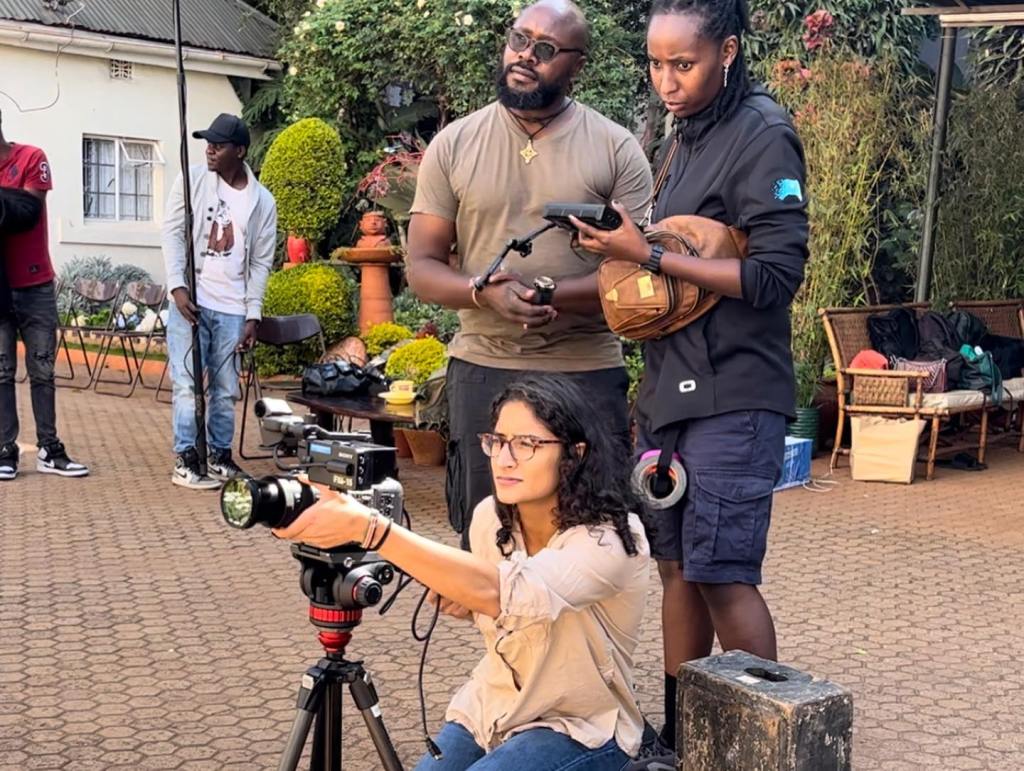
UEO: So what was your entry point into the research that informed INSIDE JOB? Were you deep in the archives? Were you talking to family members, having some of your personal history form the basis for your research as well?
KR: I was specifically interested in interracial relations; the ethnic animosity that my parents and grandparents grew up with in East Africa was foreign to me and antithetical to my own values, having grown up in a multicultural society. I wanted to understand where that deep-seated animosity came from, so I looked for interracial, black-brown intimacies in a highly segregated colonial and postcolonial East Africa. I found that the most common interracial relationship was between brown employers and black African domestic workers. So my research became focused on the space of domestic labor, which is an inherently private realm, and its main players—women, domestic workers, poor people—were subalterns, so for multiple reasons, stories from East African Asian households and of these particular relationships were largely excluded from traditional archives or records. Through INSIDE JOB, I tried to make this private, invisible domestic world more visible and more firmly a part of the larger historical record and discourse.
Because of the privacy and invisibility of the domestic space, I conducted my own oral history interviews with family and family friends—brown housewives who had domestic workers in East Africa in the 60s-70s, the early days of independence. I interviewed them about their domestic lives and relationships with domestic workers. I also enlisted some researchers in Kenya to conduct similar interviews with black domestic workers who’d worked for Indian employers. Those interviews informed the story and details of INSIDE JOB. Through the interviews, I saw how people on both sides essentialized the other, attributing qualities they observed in the household to the race at large. For instance, brown employers attributed theft not to necessity or poverty, but to workers’ blackness. And black employees ascribed some employers’ mercilessness and anger to the brown race. The theme of theft emerged strongly in my interviews—it was something everyone talked about, both the reality and lived experience as well as the exacerbated fear and mythology of it. I saw it as symbolic; both sides felt the other had stolen something from them. Many black Africans felt that Asians came in and stole all the wealth and land in the first place. And with the mass exodus in the 70s, Asians felt black Africans had stolen their businesses, properties, and their very homes. But it was also interesting to see the ways cultural boundaries were sometimes transcended in the household. The real, genuine intimacy fostered there (even though it was usually deeply intertwined with exploitation and inequality) was pretty radical for two communities that had been so systematically separated and segregated.
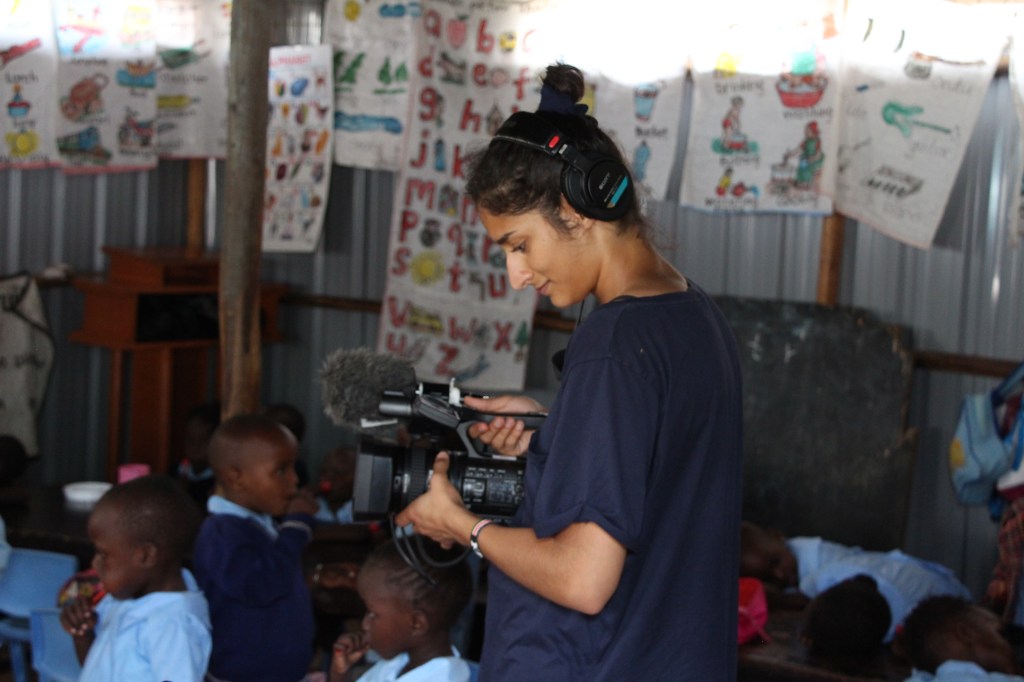
UEO: Changing gears to your other film you made in Kenya in 2023, MAMA OF MANYATTA, how did you meet Phelgone, your film’s subject, and how did that film come to fruition?
KR: My older sister first met Phelgone through a summer global health program that connected college students with local Kenyan NGOs and CBOs. She was introduced to Phelgone and her organization, Pal Omega, through that program and spent the summer with them. After forming a deep personal bond with Phelgone, my sister told me there was a story there that needed to be told. So I went to Kiusmu, met Phelgone, and instantly agreed with my sister. Phelgone is one of the most extraordinary, selfless, and compassionate people I’ve ever met; she was like a mother who took me under her wing in the time I spent with her and her community both before and during filming. I made this film from a place of respect and love. I wanted to make a film that showed her as the superwoman she was, making an enormous impact in her community, as well as the everyday woman she was, who collected stuffed animals and giggled at silly things. And I wanted to make a film that wasn’t a narrative of poor Africans suffering, but instead, the authentic story I saw of African self-empowerment, leadership, and resilience in the face of trauma.
UEO: That came through well, especially in the scenes of dancing and prayer — moments of joy. And what I found so interesting was with survivors in the film talking about their HIV diagnosis, none of the women seem to focus on the person who gave them HIV. They’re not dwelling on the violence that happened—and maybe they don’t have the luxury to. Instead, they all seem to focus on their lives after HIV.
KR: Yes, that is interesting. I think that was in large part due to Phelgone and this mindset she instilled of looking forward, not of blame or hate, but one of what can you control, what is in your power – that’s probably what gave a lot of those women the hope and strength to continue.
UEO: How did you approach going to the survivors meeting and making them feel comfortable? And more broadly, how did you think about the ethical challenges in making a film like MAMA OF MANYATTA?
KR: It helped that I had a pre-existing relationship of trust with Phelgone; many people trusted me because she trusted me and they trusted her. So having that rapport with her was a huge factor in gaining access to different people and their stories. But also, me speaking some Swahili and also spending time with people without my camera—all of that was important and always is with making documentaries. You have to spend time with and care about people to build trust. The survivors I interviewed were also women I danced with and laughed with. I think there needs to be real human engagement, you can’t just be a fly on the wall who enters, records, then leaves — that feels like a disingenuous and exploitative way of making a film. I think documentary film, when done right, can be a beautiful way to bring different people together.
UEO: There’s a reporter who said to me once that, at the end of a conversation, she wants to be leaving interviewees better than when she found them. Especially when asking people to rehash these harrowing things that have happened to them. Your film does that in a way because these women are not being defined by their assault or disease. With the dancing and singing scenes, you’re not just asking people to pour out their trauma on camera, but it’s also hopefully cathartic, in a way.
KR: Yes, exactly.
UEO: Did your relationship to the film change after Phelgone’s death?
KR: She passed away in the middle of my editing. It was really difficult, but it gave me this renewed drive to make the film. The film took on a new weight; it became about preserving a legacy and letting the world know Phelgone. And it also gave me a new relationship to filmmaking and faith in general. The week after I left Kisumu and finished shooting, Phelgone’s health started deteriorating rapidly. I couldn’t have made the film any later than I did, and that made me think there was a reason that someone—and I was lucky to happen to be that someone—had been sent there to her at that exact point in time, at the last possible moment, to capture her story.
UEO: Does she have any family?
KR: Yes, a son. I screened the film in Kenya last summer at the Unseen Nairobi theater, which was really beautiful because the people from Pal Omega that I was close with, including Phelgone’s son, Mike, came and watched the film for the first time. Afterwards, Mike told me that, in the several months since his mother had died, he hadn’t yet cried, but watching the film finally made him cry, allowing him to grieve and have this moment of release.
UEO: That’s beautiful. Zooming out now, what synergies do you see between the two different films you made in Kenya?
KR: I did a screening at the Aga Khan Museum in Toronto last October and I remember in the Q&A, an audience member made a comment that stuck with me. He said that it felt like INSIDE JOB was the world contained within the bubble of an Indian household in East Africa, and MAMA OF MANYATTA was the world you come face-to-face with as soon as you step outside of that house, that bubble. And MAMA is the world that a lot of domestic workers come from. The unfortunate reality is that brown employers have long ignored and known very little about, let alone stepped foot into the world or lives, histories, and homes of their black domestic workers outside of the Asian household. There was this line that they never crossed, but me stepping foot into Manyatta, with a camera and with compassion, was almost a radical way of crossing that line, only a few decades after the period of intense segregation that defined the world of INSIDE JOB.
Other than that, the films both engage with themes I naturally gravitate towards: power, the consequences of race and inequality, and caregiving or communities of care. Also, with both films, there was never a question of whether I should make them. It was so clear to me that I both wanted and needed to tell these stories that I had unique access to and deep personal investment in.
UEO: In MAMA OF MANYATTA there’s this looming history and threat of post-election sexual violence — how some of the women contracted HIV. When there’s any instability, these women are the first to be harmed and last to be thought of.
KR: For sure. Women in communities like these definitely bear the brunt of political unrest and violence, and we could have a much longer and separate discussion about post-election violence in Kenya, but the point is that violence is so common, so rampant in communities like Manyatta that it’s vital for women need to have the tools to protect themselves. That’s why you saw that scene where Phelgone tells the girls to wear female condoms during elections, because sexual violence is bound to happen and they need to be prepared and protected.
UEO: The onus is on them to protect themselves, which in the Western world could be perceived at first as problematic. But when your life is in immediate danger, what are you supposed to do?
KR: Exactly. Rape culture isn’t going to change overnight, so in the meantime, these women need to protect themselves from getting pregnant, or HIV or STDs. It’s a really difficult reality to confront or accept, especially coming from a Western perspective like you said, but it’s such a necessity.
UEO: Totally. On a final note, maybe you can speak briefly about upcoming projects you’re working on?
KR: I’m developing a couple of scripted feature film ideas at the moment. One is another Kenyan-centered story, based on a woman I love very much, who has worked for my family for over 25 years as a domestic worker and caregiver. She grew up in a slum and began working for an Indian family there when she was only 17. Eventually, she moved abroad with that family, raised their kids, and found her way to my family in Canada. In many ways, she’s the character who traverses both the worlds of my last two films; she comes from the world of MAMA OF MANYATTA but has spent her entire adult life living and working in the world of INSIDE JOB. I’m still in the early research/development phase, but this is a story I know I want and need to tell. There are so many more stories that I’m excited to explore through film, and this is just one of what I hope will be many more to come.
About the Authors:
Kiana Rawji is an award-winning Canadian producer, director, and writer based in New York; she has produced and directed short films that have screened across the U.S., Canada, and East Africa. Her intersecting identities as a South Asian Muslim woman and daughter of East African immigrants inform her work and draw her towards themes of diaspora and social justice. Kiana’s most recent films were shot in Kenya, where her family is from: MAMA OF MANYATTA is a documentary that follows an extraordinary woman fighting HIV & gender-based-violence in a Kenyan slum. The film screened at the 2023 Pan African Film Festival, Essence Film Festival and the Zanzibar International Film Festival, where it was awarded a Special Jury Mention. Her recent fiction film, INSIDE JOB, was based on her Harvard thesis research on the South Asian diaspora in East Africa and her family history. The film is about an Indian woman who suspects her African domestic workers of stealing jewelry in 1970s Nairobi and it premiered at the 2023 Chicago South Asian Film Festival. INSIDE JOB & MAMA OF MANYATTA screened at the Unseen Nairobi theater in Kenya and the Aga Khan Museum in Toronto. Kiana has made several other films in Canada and the U.S., and she now works at Ark Media, a premier documentary company in the U.S. You can find more info and some of Kiana’s previous work at www.kianarawji.com.
Uwa Ede-Osifo is a reporter at The Dallas Morning News. She previously reported for NBC News Digital and wrote for Slate. She also has work published in Vulture and Time Out.
 Isele Magazine